Flexible Tube Routing
Compact routing can be arranged around important components and risk points.
Protect electrical panels, control cabinets, server racks, generators, machinery and other compact enclosures with a localised suppression arrangement designed to respond close to the source of risk. Flexible detection tubing can be routed around important components where conventional room-wide protection may be difficult or unnecessarily broad.
We help assess the enclosure, identify critical risk points, plan tube routing, position suppression components and support professional installation, inspection access and future servicing.
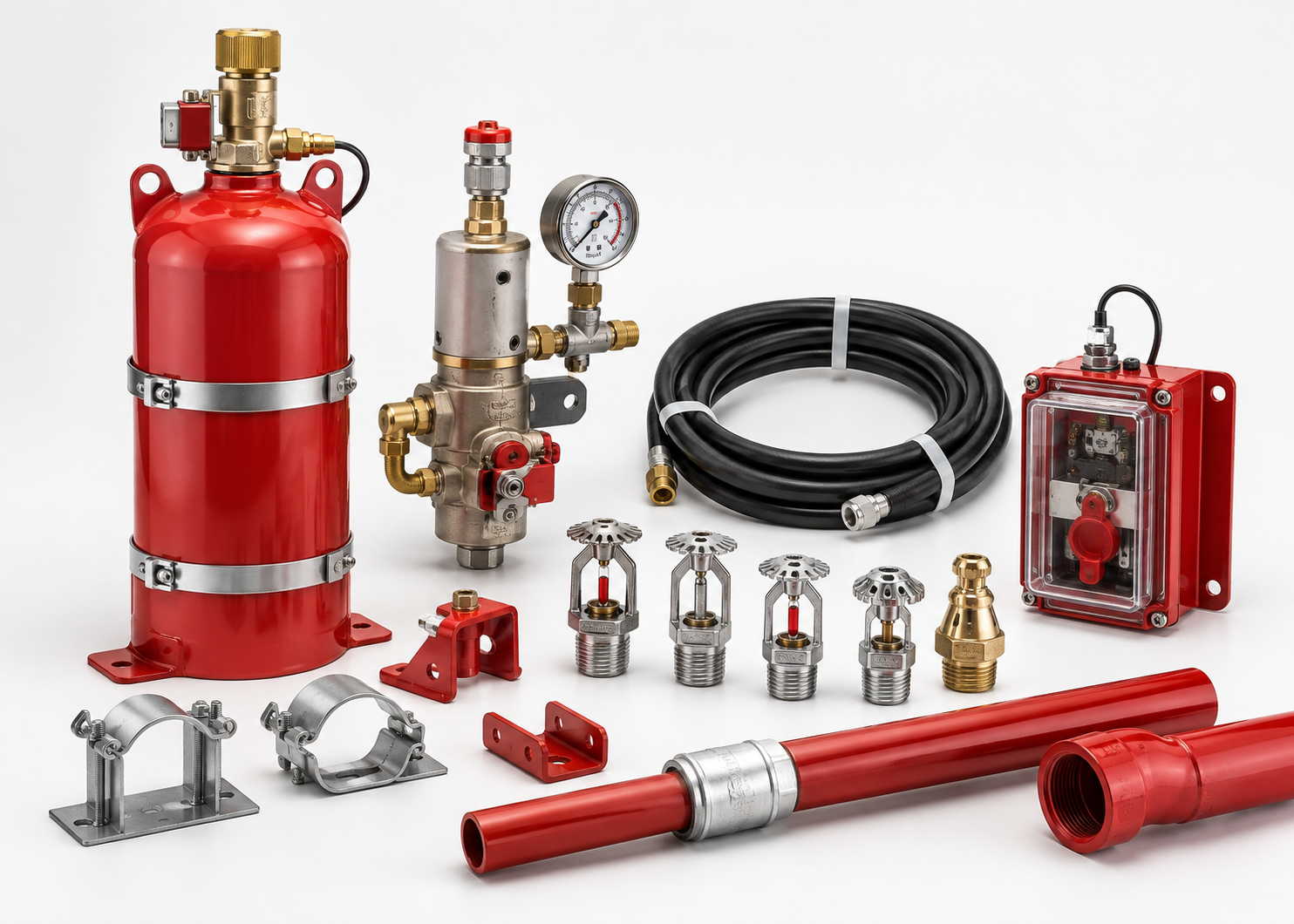
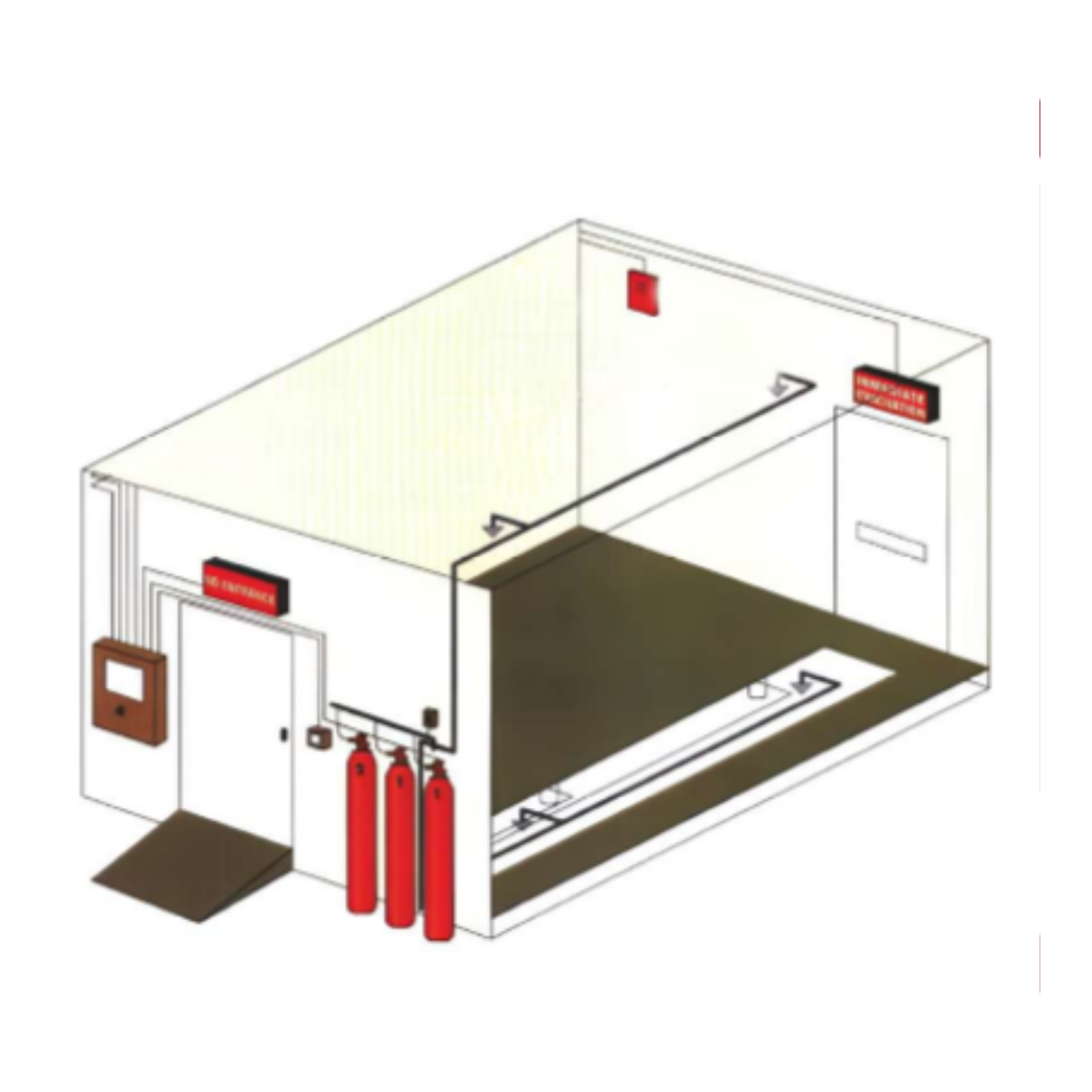
A fire tube suppression arrangement routes a detection tube through or around a protected enclosure. The compact configuration is suited to areas where space is limited and localised response is preferred.
We help assess the enclosure, plan tube routing, position the suppression components and support careful installation and future inspection.
Compact routing can be arranged around important components and risk points.
The system is intended to act close to the protected enclosure or equipment.
A practical option for panels, cabinets and machinery with limited space.
Guidance for visual checks, accessibility and future servicing needs.
Tube suppression is suited to clearly defined equipment spaces where a fire may begin within an enclosure and rapid local response is important. Careful routing brings detection close to components that need protection.
01Localised detection and suppression around panel components and wiring.
 02
02Compact routing around enclosed control and automation equipment.
 03
03Focused protection for clearly defined equipment and rack spaces.
 04
04Local response around machinery compartments and operational risk zones.
 05
05Protection around electrical sections, power equipment and compact controls.
 06
06A practical option where conventional room-wide coverage is difficult.
A compact suppression system requires careful understanding of the equipment, accurate tube routing and professional installation that keeps inspection and future service access in mind.
We review the equipment, available space, ventilation, access and the components or areas where a fire risk may be concentrated.
Detection tubing and suppression components are positioned around the defined risk while preserving practical access for inspection and service.
The system is fitted carefully, checked for accessibility and supported with guidance for routine visual inspection and future servicing.
Share panel, cabinet or machinery details with our team for practical guidance on risk points, tube routing, component placement and installation.